
If your only experience of astrology is reading your horoscope in the back of a magazine, you could be forgiven for thinking you’ve pretty much got the idea.
Aries gets impatient. Libra needs harmony. Scorpio is intense. Mercury goes retrograde and everyone blames their ex.
There is, however, rather more to it than that.
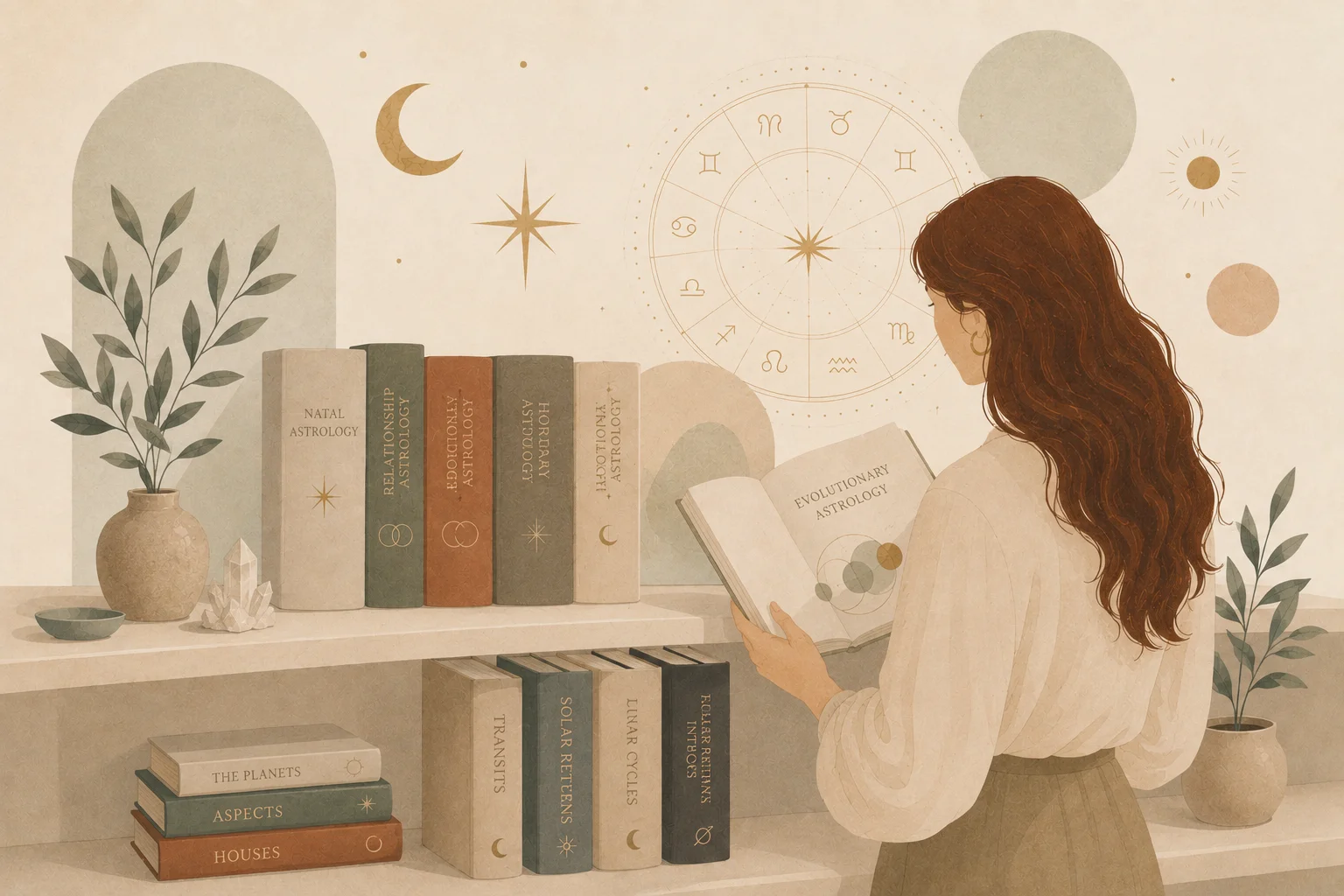
Astrology is not one single system. It is a collection of traditions, techniques and ways of interpreting the relationship between the movements of the heavens and human experience – developed across different cultures and historical periods.
There’s something a little Hermes-like about that history: ideas crossing borders, changing languages and acquiring new meanings as they travel.
Some astrologers are interested primarily in personality and self-understanding. Others are fascinated by timing and cycles. Some work with ancient techniques developed thousands of years ago. Others draw on modern psychology, spirituality or ideas about personal transformation.
And then there are astrologers who happily borrow from several approaches.
So if you’ve ever wondered why one astrologer talks about your birth chart while another talks about Jyotish, Hellenistic astrology, evolutionary astrology or horary, you’re not imagining the confusion.
There really are quite a few different kinds of astrology.
Which is fascinating once you get into it, and mildly inconvenient if you were hoping for one tidy answer before your coffee went cold.
The good news is that you don’t need to understand all of them before choosing an astrologer.
You simply need to understand the landscape.
Is there one type of astrology?
No.
This is probably the most useful place to start.
When people talk about “types of astrology”, they can actually mean several different things.
They might mean a tradition, such as Western or Vedic astrology.
They might mean a branch or technique, such as natal, horary or electional astrology.
Or they might mean an interpretive approach, such as psychological or evolutionary astrology.
These categories overlap.
An astrologer might practise Western astrology, use traditional techniques, work extensively with natal charts and take a psychological approach to interpretation.
Another might practise Jyotish, focus on timing and use a very different set of concepts and techniques.
Neither is necessarily more “real” than the other.
They’re working within different frameworks.
And that’s worth knowing before you book a reading.
Astrology traditions
The tradition an astrologer works within provides the broader framework for how they understand astrology.
Western astrology
Western astrology is probably the tradition most familiar to readers in Britain, Europe, North America and Australia.
It developed from ancient Mesopotamian and Greek traditions and evolved through the Hellenistic, medieval, Renaissance and modern periods.
Modern Western astrology is remarkably diverse.
Some practitioners work with traditional techniques inherited from earlier periods. Others practise modern psychological astrology. Some combine traditional methods with contemporary approaches.
A Western birth chart typically considers the Sun, Moon and planets, the twelve signs of the zodiac, the twelve houses and the angular relationships between planets known as aspects.
You may already know some of this language.
Your Sun sign is the one most people mean when they say, “I’m a Leo” or “I’m a Virgo.”
Useful shorthand at a dinner party; rather less useful when you’re trying to explain the last three people you dated.
But your Sun is only one part of your chart.
The Moon, Ascendant, planets, houses and aspects create a much more complex symbolic picture.
This is why a professional astrology reading can feel very different from reading a daily horoscope.
You’re looking at the whole sky, rather than one small piece of it.
Vedic astrology
Vedic astrology, commonly known as Jyotish, comes from the Indian astrological tradition.
It has its own history, philosophical framework and technical vocabulary, and it shouldn’t simply be treated as “Western astrology with different signs”.
One noticeable difference is its use of the sidereal zodiac, which relates the zodiac to the positions of the constellations, rather than the tropical zodiac commonly used in modern Western astrology.
Jyotish also places considerable emphasis on timing and life cycles, using techniques such as planetary periods known as dashas.
A practitioner may therefore approach questions about relationships, career, life direction or significant periods through a rather different framework from a Western astrologer.
For someone exploring astrology for the first time, this can be fascinating.
It also illustrates something important.
Astrology isn’t a single language with a single grammar.
It is more like a family of related languages that have developed in different places and times.
Hellenistic astrology
Hellenistic astrology developed in the Mediterranean world during the centuries following Alexander the Great’s conquests, particularly from around the late first millennium BCE into the early centuries CE.
It is one of the foundations of the Western astrological tradition.
In recent decades, there has been renewed interest in Hellenistic astrology, partly because scholars and practitioners have translated and studied surviving ancient texts.
Hellenistic astrologers developed sophisticated techniques for interpreting the birth chart, including approaches to planetary condition, houses, aspects, timing and life circumstances.
For some modern practitioners, returning to these older methods offers something quite different from contemporary psychological astrology.
There is less emphasis on astrology as a personality description and more interest in questions such as:
What kind of life circumstances are being described here?
What themes might unfold over time?
What does this particular period of life ask of us?
That doesn’t make Hellenistic astrology better.
It makes it different.
And for some people, that difference is precisely what makes it appealing.
Traditional astrology
“Traditional astrology” is a broad term rather than a single technique.
It generally refers to approaches rooted in historical astrological traditions, particularly those developed before the rise of modern astrology in the nineteenth and twentieth centuries.
Traditional astrologers may draw on techniques from Hellenistic, medieval Islamic, medieval European or Renaissance astrology.
Some place considerable importance on concepts such as planetary dignity, sect, reception and the condition of planets.
If that sounds complicated, don’t worry.
Nobody should need flash cards to get through a first consultation.
You don’t need to understand any of it before booking a reading.
The important thing to know is that a traditional astrologer may interpret your chart using a significantly different philosophy from a modern psychological astrologer.
One may ask what the chart says about the circumstances of your life.
The other may be more interested in what the symbolism says about your inner world.
Sometimes, of course, you’ll find both in the same practice.
Interpretive approaches
Some astrologers also use a particular interpretive approach – for example, psychological or evolutionary astrology – to shape how they understand and discuss a chart.
Modern and psychological astrology
Modern astrology developed in conversation with changing ideas about psychology, spirituality and personal development.
Psychological astrologers often treat the birth chart as a symbolic map of the psyche.
Rather than asking only, “What will happen?”, they may ask:
Who am I becoming?
What patterns keep repeating?
What parts of myself am I struggling to integrate?
This is where astrology begins to overlap with the language of archetypes, the unconscious and personal transformation.
Carl Jung’s ideas have been particularly influential for some modern astrologers, although Jung himself wasn’t simply an “astrologer” and his relationship with astrology was more complicated than that label suggests.
The attraction is easy to understand.
We all contain contradictions.
The confident part of us. The frightened part. The part that wants freedom. The part that desperately wants to be loved. The polished public self and the slightly messier creature who emerges when we’re tired, jealous or three glasses of wine into a dinner party.
Psychological astrology gives those contradictions a symbolic language.
And sometimes a symbol can help us see something about ourselves that a straightforward description cannot.
Evolutionary and karmic astrology
Some astrologers approach the birth chart through the ideas of evolution, karma and spiritual development.
This family of approaches is often concerned with questions such as:
What am I here to learn?
Which patterns am I being invited to outgrow?
What might this experience be asking me to become?
Karmic astrology can draw on ideas about past lives, soul development and recurring patterns across lifetimes. Not every astrologer who uses the word “karma” interprets it in the same way, and you should always ask a practitioner what they mean by it.
For some people, karma is a literal spiritual reality.
For others, it is a useful way of thinking about the consequences of choices and the patterns we repeatedly create.
Astrology doesn’t have to settle that philosophical question.
It can simply give us a language for exploring it.
Astrology and personal transformation
This brings us to one of the most interesting reasons people seek astrology in the first place.
They want to change.
Not necessarily dramatically.
Sometimes they simply want to understand why they keep ending up in the same situations.
Why do I choose these relationships?
Why do I sabotage myself just when things are going well?
Why am I frightened of making the decision I already know I need to make?
Why does this particular period of my life feel so different?
Astrology can’t answer those questions for everyone, and it shouldn’t pretend to.
But as a symbolic language, it can provide a framework for asking them.
The birth chart can be seen not as a fixed description of who you are, but as a set of potentials, tensions and recurring themes.
That distinction matters.
A chart shouldn’t become another box to put yourself in.
It can instead become a mirror.
Narcissus, of course, is the cautionary tale: reflection is useful only if, at some point, we look up again.
And mirrors, thankfully, don’t tell us what to do.
They simply show us something worth looking at.
Techniques and areas of practice
Astrologers may also use specific techniques or focus on particular areas of practice, depending on the questions they are exploring and the tradition they work within.
Natal astrology
Natal astrology is probably the best-known branch of astrology.
It starts with a simple question:
What was the sky like when I was born?
The astrologer uses your date, time and place of birth to create your natal chart. This becomes the foundation for exploring your character, relationships, strengths, challenges and the themes that may run through your life.
A natal astrology reading can be broad, looking at the overall shape of your chart.
Or it can focus on a particular question.
You might want to understand your relationships. Your career. Your family. Your sense of purpose. A recurring pattern that you can’t quite explain.
The birth chart doesn’t change.
What changes is the life you’re living and the questions you’re bringing to it.
That’s one reason people can return to natal astrology at different stages of their lives and discover something new in a chart they’ve seen before.
The symbols haven’t necessarily changed.
They have.
Or perhaps, more accurately, you have.
Horary astrology
Horary astrology takes a very different approach.
Instead of starting with the moment of your birth, the astrologer creates a chart for the moment a particular question is asked.
The word comes from the Latin hora, meaning “hour”.
The idea is that the moment a genuine question is asked can itself be astrologically meaningful.
Traditional horary astrology can be used for specific questions such as:
- Will I get the job?
- Should I pursue this relationship?
- Will I find the thing I’ve lost?
- Is this the right decision?
- Will this particular situation work out?
It is much more focused than a general natal reading.
And it can be wonderfully intriguing.
Rather than asking, “Tell me everything about myself”, you arrive with one question and see what the chart has to say about the situation.
It’s astrology with a rather good sense of occasion.
Electional astrology
If horary asks, “What does this moment tell us about the question?”, electional astrology asks something slightly different:
“When would be a good moment to begin?”
Electional astrology is concerned with choosing an auspicious time for an event or undertaking.
Historically, astrologers have used electional astrology for things such as marriages, journeys, business ventures and other significant beginnings.
The underlying idea is fascinating.
If we can’t control everything that happens to us, perhaps we can sometimes choose when to begin.
Modern practitioners may use electional astrology for launches, ceremonies, important conversations, business decisions or other occasions where timing matters to the client.
It doesn’t mean that choosing the perfect Tuesday at 2:17pm will magically guarantee success.
Life remains stubbornly life.
But the symbolism of choosing a meaningful moment can be powerful in itself.
Mundane astrology
Mundane astrology turns the lens away from the individual and towards the wider world.
The word comes from the Latin mundus, meaning “world”.
Rather than asking about one person’s birth chart, mundane astrologers study charts and planetary cycles in relation to countries, governments, political events, economies and collective developments.
It is one of the oldest applications of astrology.
For someone accustomed to personal birth charts, it can feel like discovering that astrology has been looking at the world as well as the individual all along.
Mundane astrology raises some fascinating questions about the relationship between individual experience and collective life.
How do periods of upheaval affect generations?
Why do certain historical eras seem to carry such distinctive moods?
Can astrology meaningfully describe collective experience?
Those questions sit at the more speculative edge of astrology, and different astrologers will answer them very differently.
Which is precisely why they’re interesting.
Relationship astrology
Relationship astrology looks at the dynamics between two or more people.
There are several techniques practitioners might use, including synastry, which compares two birth charts, and composite charts, which create a separate chart representing the relationship itself.
People may seek a relationship reading when they’re beginning a romance, experiencing difficulties in a long-term partnership, trying to understand a friendship or simply wondering why a particular person seems to push every conceivable emotional button.
And let’s be honest – sometimes that last category is the most compelling.
Relationship astrology isn’t about determining whether two people are “meant to be”.
A useful reading can instead explore attraction, communication, differences in temperament, recurring patterns, strengths and areas where two people may need to understand each other better.
It can be particularly valuable when approached with curiosity rather than the expectation of a cosmic verdict.
Other approaches you’ll encounter
As you explore astrology, you’ll encounter plenty of other terms.
Medical astrology traditionally explores symbolic relationships between astrology and the body and health. It should not be confused with medical diagnosis or treatment.
Financial astrology applies astrological techniques to markets, investments and economic cycles.
Relocation astrology explores how moving to a different place may alter the emphasis of a person’s chart.
Vocational astrology focuses on work, career and questions of calling or purpose.
Astrocartography maps planetary positions across the globe to explore places where different planetary themes are traditionally considered more prominent.
And there are many more.
This is one of the reasons the word “astrologer” on its own doesn’t tell you very much.
Two astrologers can both be highly experienced professionals while working in completely different ways.
What about the question you’re asking?
There is another distinction worth making when choosing an astrologer: the life question you want to explore.
You might be looking for relationship guidance, career direction, family insight, life purpose or simply a better understanding of yourself.
A life question isn’t a type of astrology in the same sense as Western or Vedic astrology. It’s the reason you’re seeking a reading.
And the two aren’t mutually exclusive. You might want to explore a relationship with an astrologer who works within Western astrology, uses psychological techniques and specializes in relationship astrology.
This is why choosing an astrologer isn’t necessarily about finding the “right” type of astrology.
It’s about finding the right combination of tradition, approach, techniques and experience for the questions that matter to you.
So which approach is right for you?
This is where all the terminology becomes useful.
Not because you need to choose a side.
But because it gives you better questions to ask.
If you’re mainly interested in understanding yourself, a natal or psychological astrology reading might appeal.
If you’re interested in timing and life cycles, look for an astrologer who works with predictive astrology or traditional techniques.
If you’re fascinated by ancient astrology, you might enjoy a practitioner specializing in Hellenistic or traditional astrology.
If your questions are about a specific relationship, look for someone experienced in relationship astrology and synastry.
If you have one very specific question about a situation, horary astrology may be worth exploring.
And if you’re drawn to questions of meaning, purpose, karma and spiritual development, an astrologer working with evolutionary, karmic or spiritual approaches may be a better fit.
There is no prize for choosing the most complicated option.
You don’t need to become an astrologer before finding one.
You simply need to find someone whose approach speaks to the questions you’re actually asking.
Before you book – choosing an astrology approach
Before booking a reading, take a few minutes to look beyond the astrologer’s job title.
- Find out which tradition they practise. Western, Vedic/Jyotish, Chinese and other traditions have different histories and methods.
- Ask which techniques they use. Natal, horary, electional, relationship and other branches serve different purposes.
- Look at their approach. Do they focus on psychology, prediction, spirituality, traditional techniques or a combination?
- Think about your question. Are you looking for self-understanding, relationship insight, timing, career guidance or something else?
- Read their profile carefully. Their language should give you a sense of how they work and what they value.
- Don’t assume one tradition is automatically better. Different systems have different strengths and philosophical assumptions.
- Ask if you’re unsure. A professional astrologer should be happy to explain their approach before you book.
- Choose curiosity over certainty. You don’t need to know exactly what you’re looking for before you begin exploring.
For the practical details to check before choosing a practitioner, use our astrology reading checklist.
Perhaps the most useful thing to remember…
You don’t have to choose your astrology like you’re choosing a religion.
You can be curious.
You can explore different traditions.
You can find one approach fascinating and another completely unconvincing.
And you can change your mind.
Astrology has been asking questions about human life for thousands of years. Perhaps we shouldn’t expect one system, one tradition or one astrologer to have the final word.
Maybe that’s part of the magic.
There is more than one way of looking at the sky.
And, rather wonderfully, more than one way of looking at ourselves.